20 Easy Suggestions On Global Health and Safety Consultants Audits
Wiki Article
Global Safety Simplified. Integration Of Expert Consultants And Intelligent Software
In the present, where companies operate in dozens of countries, that each possessing its own patchwork of local regulations and laws, the traditional method of safety and health management has reached its limit of effectiveness. Spreadsheets, email chains and fragmented reporting systems leave leaders unable to know if their business is in compliance and at what risk they're exposed [citation:11. The integration of worldwide health and safety consultants with smart software platforms represents fundamental changes in the way multinational organizations safeguard their employees and comply with their legal responsibilities. It's not just concerned with digitizing existing processes. It's about creating a single point of truth that connects headquarters with local teams and converts regulatory complexity into practical data, and ensuring an expert's judgment in every decision. Here are ten essential aspects to be aware of this new approach to globally-based safety control.
1. This Patchwork Quilt Problem Demands a Uniform Solution
There is no single international laws governing health or safety. Multi-jurisdictional companies must be aware of a plethora in local legislation, requirements for documentation and enforcement policies which differ drastically from country to country [citation: 1]. A company with offices in more than ten countries has to deal with ten sets of legal requirements, yet traditional management approaches are not able to know if these requirements are being met. Modern platforms that integrate solve this through providing leaders with an all-in-one dashboard that provides compliance levels for each location and every country in real time [citation:1]. This transparency can transform international safety monitoring from a reactive, dispersed action into a more strategic, integrated function.
2. Software Allows Visibility, However Consultants Help Control
The most successful integrations have realized the limitations of technology to address global compliance issues. According to one expert in the industry, his words "Software by itself isn't sufficient to address global compliance issues. You require people on the area who understand local law have the ability to speak the local language and know what the data is telling you" [citation: 11. The platform gives you visibility of areas where there are gaps; the consultants give you control on how to address the issues. This model of partnership guarantees that information prompts action and not just awareness, and that local variations are dealt with by professionals who know both the global framework of the client and the intricacies of local law [citation:1(1).
3. Real-Time Compliance Tracking, Across Borders
Modern integrated platforms provide the ability to monitor in real-time health and security status in all countries within which an organization operates [citation: 11. This goes beyond simply keeping records to active gap analysis--the software will constantly alert you when your company isn't complying with the local law, and allows proactive intervention before regulatory bodies or incidents make it necessary to address the issue. For multinational businesses This is a change from the backward-looking and periodic audits to continuous forward-looking compliance management [citation: 4This is.
4. The Rise of Truly Integrated Software-Consultant Partnerships
The market is experiencing an increase in strategic alliances between consultants and technology companies which are transforming from simple licensing for software to fully integrated models of service. For instance consultants from specialist firms are collaborating together with platform providers in order to provide digitally-enabled services in which expert consultants are a part of the technology their clients use [citation 88. Similarly, global recruitment and consultancy firms are collaborating with AI-powered safety software providers that provide their customers with data-driven change advice and real-time mitigation feedback [citation: 6]. These partnerships recognize that the future belongs to organizations which can integrate deep experience in the field with cutting-edge technology.
5. Automation of Assessment and Auditing, with Expert Oversight
Integrative platforms change how worldwide audits are performed. They automatize scheduling schedules, task assignments, reminders and escalation systems to ensure that audits take place at the time they are supposed to and findings are tracked through to resolution [citation: 5]. Mobile capabilities allow field-level auditors to conduct their inspections online or offline, recording findings instantly and triggering corrective actions in real time [citation:5five. But the human element remains essential. The consultants interpret the findings, conduct root cause analysis and ensure that corrective actions address more fundamental issues in the operation and culture that go beyond surface-level issues.
6. Centralised Documentation, with Access Decentralised
One of the greatest challenges for global organisations is managing the sheer volume of health and safety documentation--policies, risk assessments, training records, inspection reports, and more--across multiple countries and languages. Integration platforms can provide central cloud storage that is accessible both to local and central teams, as well as maintaining control over versions and audit trails [citation 12. This makes sure that everyone is working with the same data while ensuring that local requirements for documentation are met, and that regulators or auditors have access to complete records immediately instead of waiting for manual compilation.
7. Strategic Alignment to Evolving International Standards
The international standards landscape is undergoing significant transformation, with ISO 9001 (quality), ISO 14001 (environmental), and ISO 45001 (occupational health and safety) all entering revision cycles through 2026 and 2027 [citation:7][citation:10]. These revisions are focused on digital transformation organization resilience, mental risks, psychosocial as well as incorporation with ESG frameworks [citation:10]. Integrated solutions that integrate software and consultants are in a position to assist organizations through these challenges, with platforms specifically designed to comply with emerging standards and consultants who are aware of both the requirements of today and new expectations [citations:99.
8. Cultural and Language Competences In
The effective management of global risks is more than translation. It also requires the ability to communicate with people from different cultures. Innovative integrated services ensure that local employees are not only certified according to international standards but are also fluent in both English and the local language as well as trained in both local legislation as well as the global framework used by clients [citation:11. This dual fluency ensures that communication between the headquarters and local teams is seamless, and that local cultural factors that affect safety are properly understood, and that safety programs have a resonance with local people instead of becoming viewed as foreign imposed rules.
9. Moving from Compliance Burden to Strategic Advantage
Businesses that successfully integrate consultant know-how with intelligent software see that safety management goes from a burden for compliance into a competitive advantage. Real-time dashboards provide insights that inform business decisions--identifying high-risk areas before expansion, benchmarking performance across regions, and demonstrating robust governance to investors and insurers [citation:1][citation:9]. The data generated through integrated systems is used to drive continuous improvement and allows organizations to go beyond reactive incident response to a more predictive approach to risk management.
10. Scalability without Complexity Sacrifice
Perhaps the most striking benefit of integrated consultant-software solutions is their capacity to scale. In the event that an organization has operations in five or fifty countries, it's the same technology and network can be expanded to accommodate the demands of their clients without increasing administrative complexity [citation:4]. New sites are able to be integrated with pre-configured frameworks for compliance that can be tailored according to local regulations, linked immediately to the worldwide dashboard, and supported by locally based consultants who understand both local contexts and requirements of the global standard [citation 11. Scalability means that as businesses expand, their security management capability grows with them--not just as an extra consideration, but as an integrated part right from the start. Check out the top global health and safety for site info including office safety, health and safety specialist, safety courses, health and safety specialist, safety day, safety consultant, safety precautions, safety certification, safety meeting, safety video and top health and safety consultants for more recommendations including safety at construction site, workplace safety courses, health hazard, occupational safety and health administration training, occupational and safety, occupational health and safety, work safety training, occupational health & safety, job safety assessment, identify hazards and more.
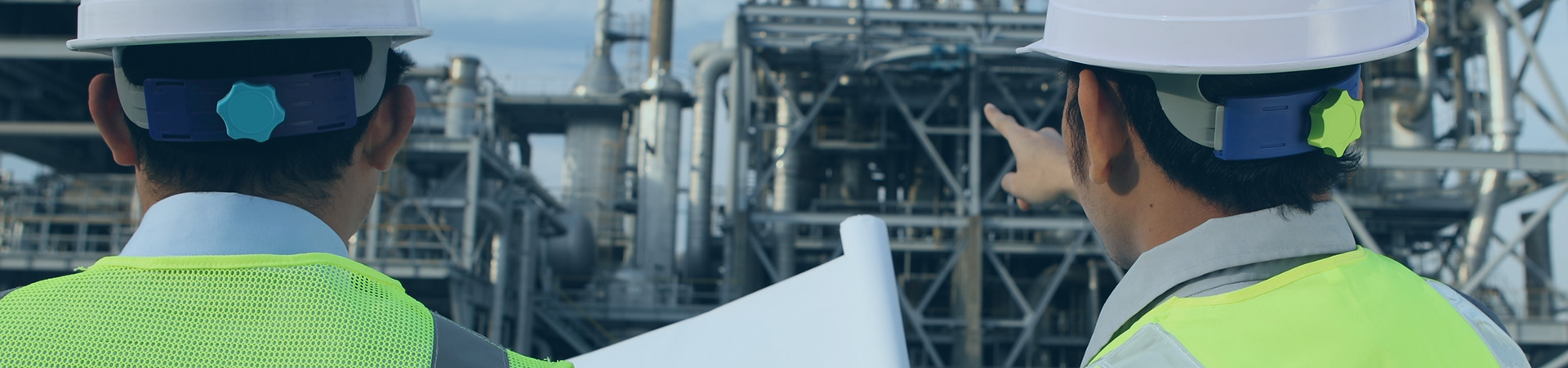
Achieving The Future Of Workplace Safety: Connecting On-The-Ground Knowledge With Global Tech Solutions
The safety profession stands at an intersection point. Through the course of a century, improvement meant better engineering controls, more extensive training, and more strict enforcement. These practices are still crucial, but they have reached diminishing returns in many industries. The next leap forward in technology will not be due to a single technological breakthrough but from the integration of two capacities that have for a long time been isolated and the profound contextual wisdom that comes from experienced safety professionals who understand specific workplaces, and the analytical power of technological platforms across the globe that can deal with massive amounts data and detect patterns that are not visible to every individual. The goal of this merger is not replacing humans with algorithms. It is about augmenting human judgment through machine learning, so that the safety professional in the field gets more effective, knowledgeable, and much more effective like never before. Safety in the workplace is a matter of time. safety goes only to those who combine the two worlds seamlessly.
1. the limits of Purely Technological Approaches
The technology industry has frequently declared that software would be the only solution to bring about workplace safety. Sensors will detect hazards, algorithms would predict incidents, and artificial intelligence would provide workers with instructions on how to proceed. This has always failed because safety is fundamentally a human issue. It's a human issue that involves human judgment, human relationships, and human consequences. Technology can assist and inform, but it cannot replace the depth of understanding and expertise that an skilled safety professional brings to an environment that is complex. The future is in integration and not to replacement.
2. Beyond the limits Purely Human Approaches
Conversely, purely human approaches have reached their limits. Even the most knowledgeable safety professionals can only be able to observe how much, remember the details, and connect hundreds of dots. Human judgment is subject to fatigue, bias and the limitations of a single perspective. A single person is unable to grasp in their minds the patterns that emerge across dozens of sites or the most significant indicators that have preceded incidents elsewhere, or the regulatory changes that affect sectors they do not adhere to. Technology expands human capabilities beyond the natural limits of human capability, offering recall, pattern recognition and global perspective that complement rather than substitute for professional judgement.
3. Predictive Analytics informs you where to Go
The most powerful use of the merged capabilities is predictive analytics that directs experts at the ground they should focus their attention. The software analyses past incident data, near miss reports, audit results, and operational metrics to determine the locations, activities, or circumstances that pose a risk. The safety specialist then examines the predictions using an innate sense of what they mean in the context. Are the risks predicted to be real? Which are the primary factors driving these risks? What solutions are most appropriate due to the local context and cultural contexts? The technology makes a point; it is the human who decides.
4. Sensors and wearables can create continuous Data Streams
The increasing use of wearable gadgets and environmental sensors generates continuous streams of information that is relevant to safety that nobody else could gather. Heart rate fluctuations indicate worker fatigue. Air quality measurements detecting hazardous exposures. The tracking of locations identifies access that is not authorized to areas that are hazardous. Motion sensors detecting slips or falls. All platforms across the world aggregate this information across various regions and locations in order to detect patterns that merit our attention. Experts on the ground investigate the sensors' readings, taking into account context, and then deciding on appropriate responses. Sensors provide the data but the human experts give the meaning.
5. Global Platforms allow Local Benchmarking
Safety professionals have often wondered how their performance compares to their colleagues, yet meaningful benchmarks were seldom available. Global platforms for technology change this by aggregating anonymised data across various industries and regions. Safety managers in Malaysia can now view how their rates of incidents the results of audits, as well as most important indicators compare with similar facilities in their area and globally. This can help in setting priorities and can be used to justify request for resources. When local experts can prove how they perform compared to local counterparts, they gain an advantage in attracting investment. When they take the lead they are able to gain credibility and acknowledgement.
6. Digital Twins Allow Remote Expert Consultation
Digital twin technology -- which allows for virtual replicas from physical workplaces that adjust continuously--is enabling a completely new system of expert advice. When an on-site safety manager encounters a challenging issue they are able to communicate remotely with global subject matter experts and examine the digital counterpart, scrutinize relevant information, and offer guidance without having to travel. This enables everyone to have access to experts, allowing facilities located operating in remote locations or economies to access expert knowledge that would otherwise not be available or affordable.
7. Machine Learning Identifies Leading Indicators
Traditional safety metrics are nearly completely sagging. They reveal things that have happened before. Machine learning implemented to integrate datasets is increasingly adept at identifying indicators that could predict future events. Modifications in the pattern of reporting near-misses. The types of observations taken during safety walks. Changes in the duration between hazard identification as well as correction. These leading indicators, identified by algorithms, become the focus of experts on the ground and can identify the cause driving the changes and intervene prior to incidents occurring.
8. Natural Word Processing Extracts Insight from unstructured data
The vast majority of safety-relevant information is in unstructured formats, such as investigation reports, safety meetings minutes, interview notes, emails and discussions. Natural language processing functions within integrated platforms can evaluate the text in a large-scale manner to identify thematic patterns, sentiment changes, and emerging issues that a human reader cannot combine. When the software detects workers across multiple sites are sharing similar concerns about a specific procedure the system alerts regional and world experts who will investigate whether the procedure itself is in need of modification, rather than only local enforcement.
9. Training becomes more personalised and adaptive
The fusion of on-the-ground experience with global technology enables instruction that adapts to worker needs. The platform tracks each worker's task, knowledge, and experience, as well as their incident past, as well as training completion. If the patterns are indicative of specific knowledge issues--people who work in certain roles regularly were involved in particular types of incidents--the platform recommends specific instructional interventions. Local experts review these recommendations, adapting to the context, and supervise the training. Training becomes permanent and individualized rather than routine and generic focused on actual requirements rather than presumed requirements.
10. The role of the Safety Professional is a way to increase their effectiveness.
One of the main benefits of this merger is the advancement of the job of the safety professional. Eliminated from data collection and reporting tasks that software is better at handling, professionals on the ground focus on higher-value activities: building relationships with employees, analyzing operational realities developing effective interventions and influencing the organizational culture. Their judgment becomes more valuable because it is based on facts they could not have gathered themselves. Their opinions are more dependable since they are based on the evidence that goes beyond personal experience. The workplace safety professional of the future isn't in danger from technology, but is empowered by it. adept, influential, and more effective than ever before. Have a look at the top rated health and safety consultants for more examples including ohs act, hazards at work, workplace safety, work safety training, occupational health & safety, safety hazard, safety measures, workplace health, safety measures, safety consulting services and more.
